
prepare-house-for-real-estate-photos-a-complete-guide
Most homes don’t need a makeover to photograph beautifully. They need clarity.
A real estate photo shoot rewards the basics done well: clean lines, open surfaces, consistent light, and rooms arranged so buyers can read the space in a single glance. When that happens, photography feels effortless, and the property presents as calm, cared for, and easy to live in.
This guide is written for both real estate agents and owners, because the best results come from shared expectations, a simple plan, and smart staging decisions about what to move, what to hide, and what to leave as a feature.
A buyer walking through a home filters out plenty. A camera does the opposite. Wide angles, bright windows, glossy surfaces, and high resolution make small distractions feel louder than they did in person.
The usual culprits are predictable: streaks on glass, uneven bulb colours, half-empty bins, cords on the floor, laundry baskets, and “just for now” items that have slowly become permanent.
The good news is that preparation is rarely complicated. It’s mostly editing, the physical kind.
Leaving everything to the morning of the shoot is tempting, then stressful. A short runway gives you options: you can borrow a matching bedside lamp, replace a blown globe, or remove one oversized chair that’s been bugging you anyway.
Here’s a workable schedule that suits most properties and marketing timeframes.
When
Owner focus
Agent focus
Photographer focus
5 to 7 days prior
Declutter cupboards, garage, kids’ zones; book cleaners or stylist if needed
Confirm shot list, inclusions (drone photography, drone, floor plan, video), and key selling angles
Flag timing needs (morning light, twilight option), access requirements
2 to 3 days prior
Deep clean, minor repairs, mow/edge, remove personal photos
Check property readiness against campaign plan; confirm keys and alarm details
Confirm arrival window and expected shoot duration
Day before
Final tidy, linen refresh, hide pet items, stage outdoor furniture
Reconfirm access, parking, and any strata rules
Confirm weather plan for exteriors
Shoot day
Open blinds, switch on agreed lights, clear cars from the driveway, vacuum away
Meet photographer (or arrange access), ensure rooms are photo-ready
Shoot efficiently, flag any last-minute tweaks, room by room
Before you think about cushions or flowers, lock in the fundamentals. These are the actions that consistently lift photos across every price point.
A simple rule helps: if it sits on a surface and doesn’t help a buyer understand the room, it probably needs to go.
Light makes rooms feel larger, yet inconsistent light can make editing harder and colours look strange. Aim for a single, coherent look throughout the home.
Natural light is your friend, so open blinds and pull curtains wide. Then decide how you want interior lights handled. Many shoots benefit from lights on, provided the globes match.
After you’ve done a quick walk-through, prioritise these lighting fixes:
If a pendant, feature lamp, or wall sconce is part of the home’s personality, it can be worth switching on. If a lamp throws a very orange pool of light in an otherwise neutral room, it may be better left off. This is also where an experienced photographer’s workflow matters, since many will balance window light and interior light with careful technique.
Your entry photo is doing a lot of work. It signals maintenance, mood, and flow.
Clear the console table, remove shoes and keys, straighten mats, and check walls for scuffs. If the hallway is narrow, anything on the floor will feel twice as tight in the image.
Living areas are often “hero” shots, so they need breathing room.
Start by removing extra side tables, large pet beds, and anything that interrupts the walkways. Then square up the big items: the rug centred, the coffee table aligned, the chairs angled to invite conversation. Remotes, gaming controllers, and loose cables should disappear.
One styling move that’s nearly always worthwhile is simplifying soft furnishings. Fewer cushions, arranged neatly, read more premium than a pile of mixed patterns.
Kitchens photograph best when they look functional and generous, not busy.
Clear all benchtops, except for one or two neutral touches. Hide dish racks, sponges, hand wash, and paper towel holders. Polish taps, cooktop, rangehood, and any glossy cabinetry, because fingerprints show up fast. Remove fridge magnets, notes, and school artwork.
If the kitchen has great natural light, keep the window area clean, too. A crowded sill can turn a bright feature into visual noise.
Dining spaces often need less than people think.
Chairs pushed in evenly, table wiped, and a simple centrepiece that doesn’t block sightlines is enough. If the table is oversized for the room, consider removing one or two chairs to create a sense of space for photos.
A bedroom photo sells calm. That comes from symmetry, smooth linen, and clear floors.
Make the bed properly, hotel neat, with minimal pillows. Bedside tables should be close to empty. Hide chargers, tissues, hair tools, water bottles, and laundry. Wardrobe doors should be closed unless the campaign specifically wants storage shown, in which case, organise it first.
If you have a strong view, open the curtains fully and clear the window area, because the outside detail can be captured cleanly when the glass is spotless.
Bathrooms are small, reflective, and unforgiving. They also photograph brilliantly when they’re stripped back.
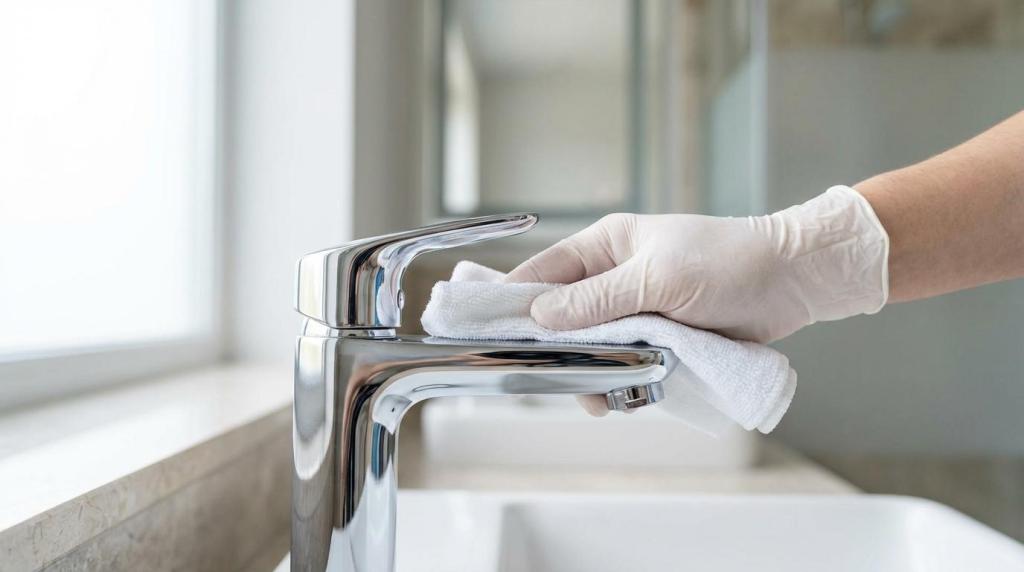
Remove all toiletries, toothbrushes, soap bottles, and bath mats. Close the toilet lid. Replace damp towels with fresh, neatly folded ones, and wipe every reflective surface. Don’t forget the shower screen tracks and chrome fittings.
A quick test helps: stand in the doorway and look at what you see in the mirror. If you can see clutter, the camera will too.
These spaces don’t always get photographed, yet they’re often visible in walkthrough content or marketing videos and influence the overall sense of order.
Keep sinks empty, hide detergents, and clear the floor. If shelving is open, make it neat and consistent. The goal is “ready to use”, not “currently in use”.
Exterior photos are often the first thing buyers see online, so curb appeal needs the same discipline as your interiors.
Mow, edge, weed, and remove leaves from paths and driveways. Put bins out of sight. Move cars off the driveway and away from the front angle. Straighten outdoor furniture and remove pool toys, hoses, and gardening tools.
If you have a balcony, treat it like an extra living room: clean floor, simple seating layout, and no drying racks.
Photography rewards evidence of care. Minor fixes can shift the perceived quality of a home, even when the changes cost very little.
Walk the property with a critical eye and deal with anything that reads as “unfinished”: loose door handles, squeaky hinges, a dripping tap, a crooked blind, a missing light cover, chipped paint at door frames.
These jobs don’t change the floor plan, yet they change confidence, which is exactly what strong marketing is trying to build.
Great property marketing for real estate is aspirational, but it also needs to be accurate. Clearing clutter, hiding bins, and styling with temporary décor are standard practices because they’re reversible and true to the space.
What you want to avoid is anything that creates a false impression about permanent features. If something is part of the property, it should remain part of the visual story. Ethical editing tends to focus on what a broom, hose, or good cleaning session could reasonably achieve.
Most shoots move from room to room quickly. If the home is ready, the photographer can focus on angles, light, and detail, rather than waiting while surfaces are cleared.
A few practical choices make the day easier:
If the campaign includes drone photography, think about what is visible from above. Pool covers, faded outdoor furniture, and a cluttered side access strip can become very noticeable.
The best shoots feel collaborative, with clear responsibility for prep and clear decision-making on what gets photographed.
A short pre-shoot conversation avoids surprises about timing, inclusions, and priorities. It also helps to confirm which spaces matter most, since not every campaign needs the same coverage.
These prompts tend to sharpen the plan quickly:
AND Photography’s workflow across real estate, commercial, and hospitality properties is built around this same principle: preparation first, then strong light control and consistent coverage. When the home is staged to show space and flow, the photography can concentrate on what buyers care about most.
If you’re considering twilight photos, treat them as a separate staging setup. Interior and exterior lights need to be working, outdoor areas need to be spotless, and cars must be parked away from the front. Twilight can add warmth and presence, especially for homes with strong façade lighting, pools, or outdoor entertaining zones.
The payoff is highest when the property already presents well in daylight, and you want a premium feel in the lead image set; incorporating drone photography can further enhance this effect.
You can do everything right and still lose time to tiny details. A final sweep keeps the look crisp.
Do one fast lap of the home and correct only what the camera will punish:
Once that’s done, step outside for the front shot check: bins gone, cars moved, hose put away, mats straight.
And then let the real estate property speak for itself.